HbA1c Chart: What Your Number Means (Normal, Prediabetes and Diabetes)
What an HbA1c of 5.7%, 6.5% or 8% actually means, the average sugar behind each number, the usual target in diabetes, and when the test can mislead.

 By Dr. Ali Raza Naqvi ·
Every year on 14 November — the birthday of Sir Frederick Banting, who co-discovered insulin — the world marks World Diabetes Day. The International Diabetes Federation and the World Health Organization have chosen "Early action on diabetes" as the theme for 2026–27. The message is simple: finding diabetes early and treating it well prevents most of its complications.
Pakistan has one of the highest rates of diabetes in the world, and many people live with high sugar for years before it is diagnosed. By then, damage to the eyes, kidneys, nerves and heart may already have started. Early action changes that.
Type 2 diabetes often causes no symptoms for years. Get your sugar checked (an HbA1c or fasting sugar test) if you:
An HbA1c of 5.7–6.4% means pre-diabetes — the best time to act, because it can often be reversed. An HbA1c of 6.5% or more usually means diabetes.
Type 1 diabetes is different: it can start suddenly at any age, often in children and young adults, with heavy thirst, frequent urination, weight loss and tiredness. These symptoms need a sugar test the same day.
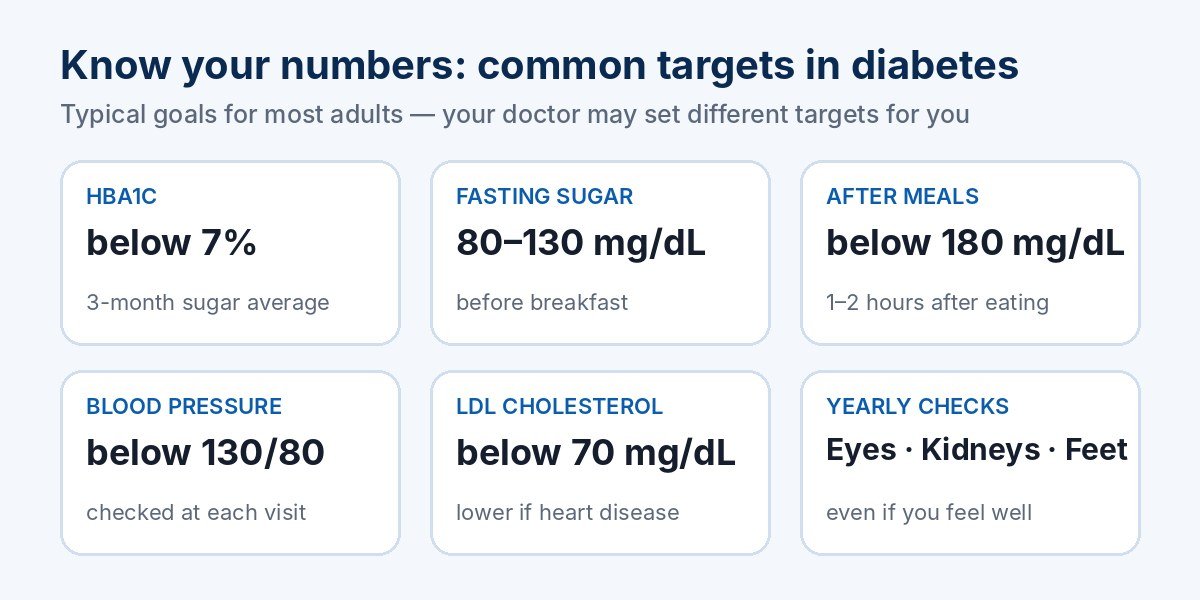
For most adults, the goal is an HbA1c below 7%. Older people or those prone to low sugars may have a gentler target; younger people and those planning pregnancy may aim lower. Controlling blood pressure and cholesterol is just as important as sugar for protecting the heart.
A 30-minute brisk walk, five days a week, lowers sugar, blood pressure and weight. A 10–15 minute walk after meals is especially effective at lowering after-meal sugar. Add some strength exercise twice a week if you can.
Modern diabetes treatment does more than lower sugar. Some newer medicines (SGLT2 inhibitors and GLP-1 medicines) also protect the heart and kidneys and help with weight. Insulin is not a "last resort" or a sign of failure — it is often the safest, most effective treatment when tablets are not enough. Never stop or change medicines on your own, and ask your doctor about low-sugar (hypo) warning signs and what to do.
If you have never been tested — get an HbA1c test. If you have diabetes — check when you last had your eyes, kidneys and feet examined, and book what is overdue. Encourage one family member to get tested too. Early action really does prevent blindness, kidney failure, amputations and heart attacks.
Learn more on our diabetes treatment in Lahore page, or book a clinic or online consultation with Dr. Ali Raza Naqvi.
This article is for general information and does not replace a personal consultation. Do not start, stop or change any medicine without medical advice.
Book a clinic visit or an online consultation.
What an HbA1c of 5.7%, 6.5% or 8% actually means, the average sugar behind each number, the usual target in diabetes, and when the test can mislead.

Is a fasting sugar of 105 or 130 normal? A clear chart of fasting, after-meal and random sugar levels, targets for people with diabetes, and when a reading needs action.
Irregular periods, unwanted hair, acne or difficulty losing weight? Here is how PCOS is diagnosed, why it raises diabetes risk, and which treatments actually help.
AppointmentsClinic visit in DHA Phase 6, Lahore, or online consultation from anywhere. See live free slots and get WhatsApp confirmation.
Your Google review takes less than a minute and helps other patients find the right care. Thank you for your support!
Write a Google review