Thyroid and Weight Gain: Can an Underactive Thyroid Stop You Losing Weight?
How much weight an underactive thyroid really adds, which tests to ask for, how to take thyroxine properly — and why treatment alone often does not melt the weight away.

 By Dr. Ali Raza Naqvi ·
Polycystic ovary syndrome (PCOS) is the most common hormone condition in women of reproductive age, affecting roughly 1 in 10 women worldwide, and it is very common in Pakistan. Despite the name, it is not mainly a disease of the ovaries. It is a hormonal and metabolic condition that affects periods, skin and hair, weight, fertility and long-term health. The good news: with the right diagnosis and a clear plan, most symptoms can be controlled well.
Not every woman has every symptom. Some women with PCOS are slim; many have only one or two features.
PCOS is diagnosed when two of the following three are present, after other conditions that look similar have been ruled out:
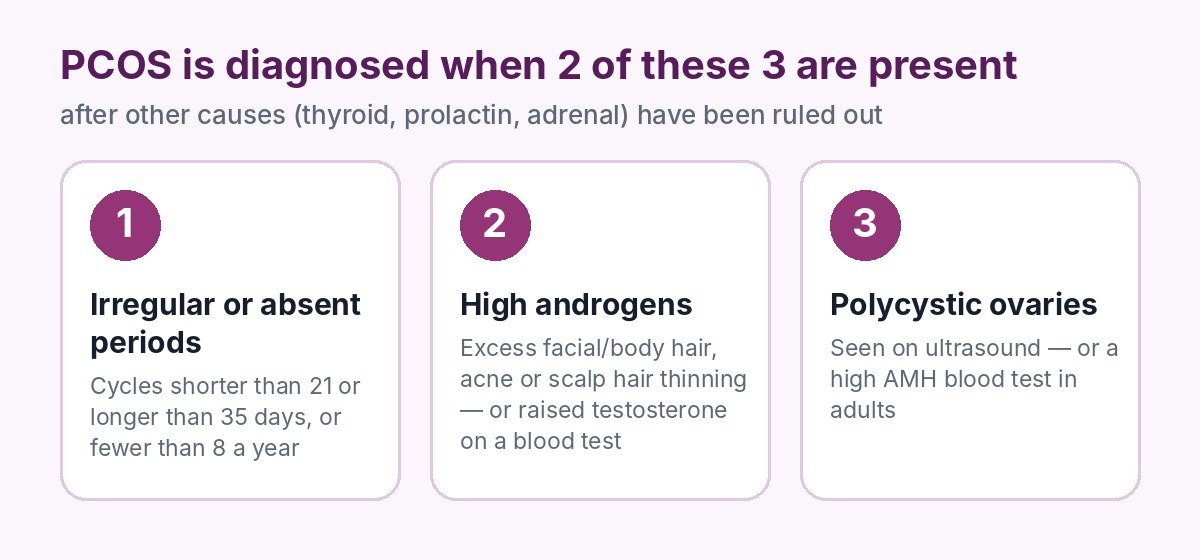
Before confirming PCOS, an endocrinologist checks for conditions that cause similar symptoms — mainly thyroid disease (TSH), high prolactin, and less commonly adrenal causes such as non-classic congenital adrenal hyperplasia. Typical tests include TSH, prolactin, testosterone, and sometimes LH, FSH and AMH. An ultrasound is helpful in adults but is not needed for diagnosis in teenagers, because normal young ovaries often look "polycystic".
Most women with PCOS have insulin resistance — the body needs more insulin to keep sugar normal. Over time this raises the risk of:
This is why every woman with PCOS should have her sugar (HbA1c or a glucose tolerance test), cholesterol and blood pressure checked, and repeated every 1–3 years.
Treatment is tailored to what matters most to you — regular periods, skin and hair, weight, or pregnancy.
Losing even 5–10% of body weight can restart regular periods, improve ovulation and lower diabetes risk. Practical steps: fewer sugary drinks and refined carbohydrates (white rice, naan, sweets), more protein and vegetables, and at least 150 minutes of activity a week. Crash diets do not help in the long term.
The combined oral contraceptive pill is usually first-line for women not trying to conceive. It regulates periods, protects the womb lining, and reduces acne and hair growth. Cyclical progesterone is an alternative.
The pill, plus anti-androgen medicines in some women, reduces hair growth over 6–12 months. Laser hair removal works well alongside medical treatment.
Metformin improves insulin resistance and can help weight and cycles. For women with obesity, newer weight-loss medicines (GLP-1 injections) can help significantly — but they must be stopped before trying to conceive and are not used in pregnancy.
Many women with PCOS conceive with treatment. Letrozole is now the first-line tablet to help ovulation. Weight loss before pregnancy improves the chances and reduces pregnancy complications.
PCOS is a long-term condition, but it is very manageable. Women who understand their condition, check their sugar regularly and follow a realistic plan usually do very well — including having healthy pregnancies. If you think you may have PCOS, an assessment with an endocrinologist will confirm the diagnosis, rule out other causes and give you a plan that fits your goals.
Read more on our PCOS and women's hormone clinic page, or book a clinic or online consultation.
This article is for general information and does not replace a personal consultation. Do not start, stop or change any medicine without medical advice.
Book a clinic visit or an online consultation.
How much weight an underactive thyroid really adds, which tests to ask for, how to take thyroxine properly — and why treatment alone often does not melt the weight away.
This year's World Diabetes Day theme is "Early action on diabetes". Here is what early action means for you — testing, targets, food, medicines and the yearly checks that prevent complications.
What tirzepatide is, how much weight people lose, how the dose is increased, common side effects, and who should not use it — explained by an endocrinologist in Lahore.
AppointmentsClinic visit in DHA Phase 6, Lahore, or online consultation from anywhere. See live free slots and get WhatsApp confirmation.
Your Google review takes less than a minute and helps other patients find the right care. Thank you for your support!
Write a Google review