PCOS in Pakistan: Symptoms, Diagnosis and Treatment That Works
Irregular periods, unwanted hair, acne or difficulty losing weight? Here is how PCOS is diagnosed, why it raises diabetes risk, and which treatments actually help.

 By Dr. Ali Raza Naqvi ·
"Doctor, is my thyroid the reason I can't lose weight?" is one of the most common questions in an endocrine clinic in Lahore. The honest answer: an underactive thyroid can cause some weight gain, but it is rarely the whole story. Understanding the difference helps you get the right treatment and set realistic goals.
The thyroid gland in the neck makes hormones (T4 and T3) that set the body's metabolic speed — how fast you burn energy. When it makes too little hormone (hypothyroidism), everything slows down. When it makes too much (hyperthyroidism), metabolism speeds up and people usually lose weight.
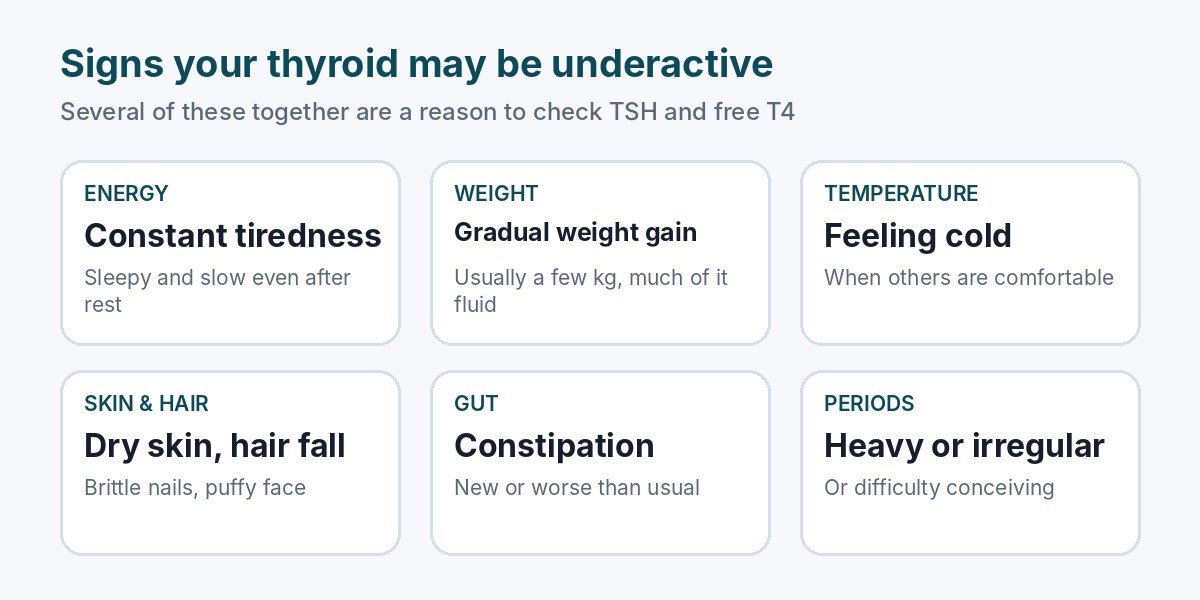
Untreated hypothyroidism typically adds a few kilograms, and much of it is retained salt and water rather than fat. Large weight gains of 10–20 kg are usually due to other factors — diet, activity, sleep, medicines, insulin resistance or PCOS — even when the thyroid is also low.
That is why some people are disappointed when their thyroid is treated and the weight does not fall much. Treatment removes the thyroid's part; the rest needs the usual weight-loss steps.
A mildly raised TSH with a normal free T4 (subclinical hypothyroidism) does not always need treatment. It depends on the TSH level, symptoms, age, antibodies and pregnancy plans — an endocrinologist can advise.
Once your TSH is in the normal range, your body responds to diet and exercise like anyone else's. Focus on smaller roti and rice portions, more protein and vegetables, no sugary drinks, and at least 150 minutes of walking a week. If weight still will not move, ask about insulin resistance, PCOS or sleep apnoea, and whether a weight-loss medicine is suitable for you.
Learn more on our thyroid specialist in Lahore page, the hypothyroidism and thyroxine leaflet, and our weight management clinic.
Thyroid kam kaam kare (hypothyroidism) to wazan aam tor par sirf kuch kilo barhta hai, aur us ka bara hissa paani hota hai. Bohat zyada wazan barhne ki wajah aksar khana, kam chalna phirna, neend ya PCOS hoti hai. Pehla test TSH hai. Thyroxine khaali pait, nashte se 30–60 minute pehle lein, aur calcium ya iron ki goli se 4 ghante door rakhein. Wazan kam karne ke liye kabhi thyroxine ki dose khud na barhayein.
Need a personal plan? Book a clinic visit in DHA Lahore or an online consultation with Dr. Ali Raza Naqvi, FRCP (London), Consultant Endocrinologist & Diabetologist.
This article is for general information and does not replace a personal consultation. Do not start, stop or change any medicine without medical advice.
Book a clinic visit or an online consultation.
Irregular periods, unwanted hair, acne or difficulty losing weight? Here is how PCOS is diagnosed, why it raises diabetes risk, and which treatments actually help.
What tirzepatide is, how much weight people lose, how the dose is increased, common side effects, and who should not use it — explained by an endocrinologist in Lahore.

Is a fasting sugar of 105 or 130 normal? A clear chart of fasting, after-meal and random sugar levels, targets for people with diabetes, and when a reading needs action.
AppointmentsClinic visit in DHA Phase 6, Lahore, or online consultation from anywhere. See live free slots and get WhatsApp confirmation.
Your Google review takes less than a minute and helps other patients find the right care. Thank you for your support!
Write a Google review