HbA1c Chart: What Your Number Means (Normal, Prediabetes and Diabetes)
What an HbA1c of 5.7%, 6.5% or 8% actually means, the average sugar behind each number, the usual target in diabetes, and when the test can mislead.

 By Dr. Ali Raza Naqvi ·

A sugar check at a lab or with a home glucometer is often the first sign that something is wrong. But a single number can be confusing: is 110 high? Is 160 after lunch normal? This guide explains what each reading means and what to do next.
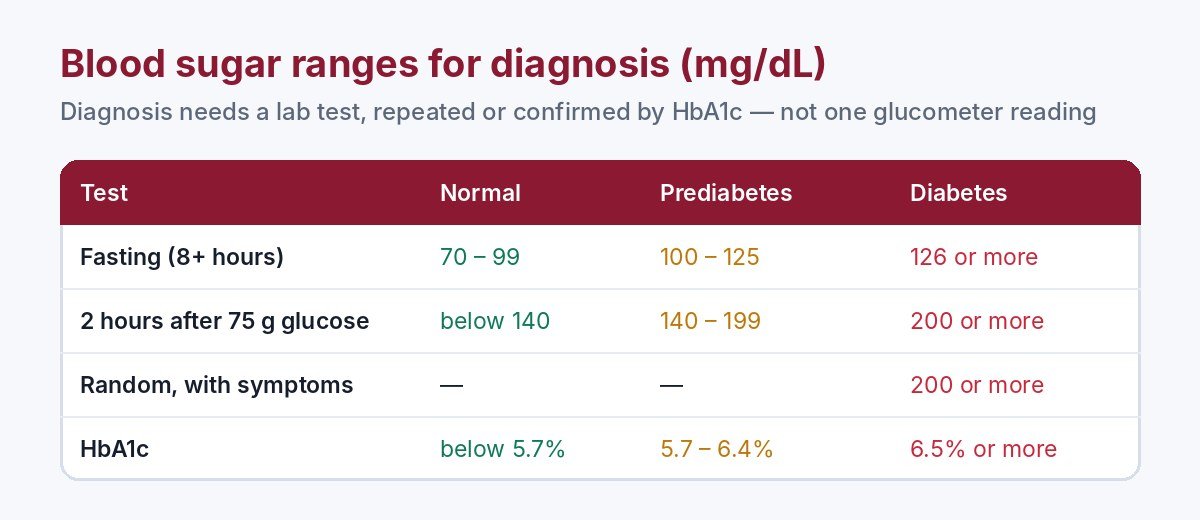
Diabetes should be diagnosed with a lab test, repeated or backed up by an HbA1c — not with one glucometer reading. Home meters can read 10–15% higher or lower than the lab.
In people without diabetes, sugar rises after eating but usually stays below 140 mg/dL two hours after a meal. A heavy meal of rice, naan or sweets can push it higher for a short time.
Older people and those prone to low sugars may have gentler targets — follow the plan your doctor sets.
Many people are surprised that their morning sugar is higher than their evening sugar. Common reasons:
Find out more on our sugar specialist in Lahore page and the low blood sugar leaflet.
Khaali pait sugar (fasting) 70–99 normal hai, 100–125 prediabetes, aur 126 ya zyada diabetes ki nishani hai. Khane ke 2 ghante baad normal sugar 140 se kam rehti hai. Diabetes ke mareez ka target khaali pait 80–130 aur khane ke baad 180 se kam hai. 70 se kam sugar khatarnak hai — foran meethi cheez lein. Diagnosis hamesha lab test se karein, sirf ghar ki machine se nahi.
Need a personal plan? Book a clinic visit in DHA Lahore or an online consultation with Dr. Ali Raza Naqvi, FRCP (London), Consultant Endocrinologist & Diabetologist.
This article is for general information and does not replace a personal consultation. Do not start, stop or change any medicine without medical advice.
Book a clinic visit or an online consultation.
What an HbA1c of 5.7%, 6.5% or 8% actually means, the average sugar behind each number, the usual target in diabetes, and when the test can mislead.
How much weight an underactive thyroid really adds, which tests to ask for, how to take thyroxine properly — and why treatment alone often does not melt the weight away.
This year's World Diabetes Day theme is "Early action on diabetes". Here is what early action means for you — testing, targets, food, medicines and the yearly checks that prevent complications.
AppointmentsClinic visit in DHA Phase 6, Lahore, or online consultation from anywhere. See live free slots and get WhatsApp confirmation.
Your Google review takes less than a minute and helps other patients find the right care. Thank you for your support!
Write a Google review